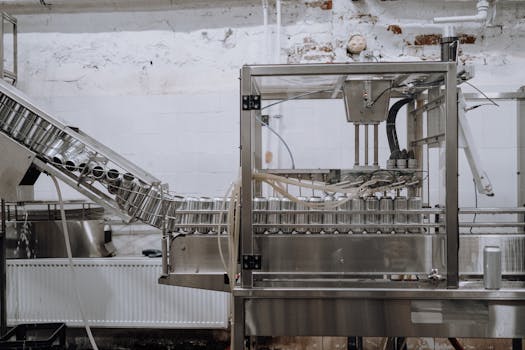

Are you still wrestling with manual finishing processes, feeling the squeeze on timelines and quality? It’s a familiar story in many industries. The promise of automated finishing technology often conjures images of gleaming robots and futuristic factories, but the reality is far more practical – and accessible – than you might think. This isn’t just about replacing people; it’s about empowering your operations to achieve consistent, high-quality results with less friction. So, how do you move beyond the hype and actually make automated finishing a game-changer for your business?
Understanding What Automated Finishing Really Means
Let’s cut to the chase. Automated finishing technology refers to the use of machines, robotics, software, and integrated systems to perform tasks traditionally done by hand, such as polishing, deburring, sanding, painting, coating, and assembly. Think of it as taking the most repetitive, error-prone, or physically demanding aspects of your finishing workflow and handing them over to systems designed for precision and endurance. It’s about consistency, repeatability, and freeing up your skilled human workforce for more complex problem-solving and oversight.
In my experience, the biggest hurdle isn’t the technology itself, but the perception that it’s only for massive production lines. This simply isn’t true anymore. Modular systems and adaptable solutions mean that businesses of all sizes can leverage these advancements.
Why Now? The Business Case for Automation in Finishing
The pressures on manufacturers today are immense: tighter margins, demands for faster turnaround, and a constant push for superior product quality. Manual finishing, while essential, often becomes a bottleneck. It’s labor-intensive, prone to human error (leading to rework and scrap), and can be ergonomically challenging.
Automated finishing technology addresses these pain points directly:
Unwavering Consistency: Machines don’t get tired or have off days. This means every part receives the same level of attention, ensuring uniform surface finishes and coating thickness.
Significant Cost Reduction: While the initial investment is a factor, the long-term savings are substantial. Reduced labor costs, lower scrap rates, minimized rework, and optimized material usage all contribute to a healthier bottom line.
Enhanced Throughput: Automated systems operate at a steady, often faster pace than manual methods, dramatically increasing production output without compromising quality.
Improved Worker Safety and Morale: By taking over hazardous or repetitive tasks, you protect your employees and allow them to focus on more engaging, value-added roles. This can significantly boost job satisfaction.
Strategizing Your Automated Finishing Implementation
Simply bolting on a robot won’t magically solve your problems. A thoughtful approach is key.
#### 1. Identify Your Bottlenecks and High-Volume Tasks
Before you even look at specific technologies, conduct a thorough audit of your current finishing processes.
Where are you experiencing the longest lead times?
Which tasks are most prone to quality issues or rework?
What are the most physically demanding or hazardous jobs?
Which parts or product lines have the highest volume and require repetitive finishing?
Focusing on these areas will yield the most immediate and impactful results from automation. Don’t try to automate everything at once. Start with one or two key processes where you can see a clear return on investment.
#### 2. Choose the Right Technology for the Job
The landscape of automated finishing is diverse. You’ll encounter various solutions:
Robotic Arms: Highly versatile for complex geometries and a wide range of tasks like sanding, grinding, polishing, and spraying. They offer flexibility and can be reprogrammed for different parts.
Automated Polishing and Buffing Machines: Specialized equipment designed for high-volume, consistent polishing of specific part types.
Automated Coating Systems: Including spray booths, dip coating, and powder coating lines that ensure uniform application of paints, lacquers, or protective finishes.
Deburring and Edge Finishing Automation: Systems that precisely remove burrs and create consistent edge profiles, crucial for many manufactured components.
Vision Systems and Sensors: These are often integrated to guide robots, inspect finishes, and ensure quality control throughout the process.
When evaluating options, consider not just the hardware, but also the software and integration capabilities. How easily can it interface with your existing systems? What kind of training is required for your team?
#### 3. Piloting and Iteration: Don’t Fear the Pilot Program
Starting with a pilot program is an excellent way to de-risk the investment.
Select a representative product or part.
Implement the automated solution for that specific item.
Measure performance rigorously: Track cycle times, quality metrics (e.g., surface roughness, defect rates), material consumption, and labor hours.
Gather feedback from your operators and engineers. They’re the ones working with the system daily and can offer invaluable insights.
This iterative approach allows you to fine-tune parameters, make necessary adjustments, and build confidence before a full-scale rollout. It’s interesting to note how often the initial setup requires tweaking to truly optimize performance.
Integrating Automation Seamlessly into Your Workflow
The goal of automated finishing technology isn’t to create a siloed operation, but to enhance your entire production chain.
Material Handling: Consider how parts will be fed into and removed from the automated finishing cells. This might involve conveyors, robotic pick-and-place systems, or automated guided vehicles (AGVs).
Data Integration: Modern automation systems generate a wealth of data. Ensure you have the infrastructure to collect, analyze, and act on this information. This data can inform process improvements, predictive maintenance, and quality control.
Human-Machine Collaboration: Think about how your human operators will interact with the automated systems. This includes programming, monitoring, maintenance, and quality inspection. Empowering your team to manage and optimize these systems is crucial for long-term success.
One thing to keep in mind is that the “finishing” process often extends beyond the machine. How do you ensure the parts are ready before they enter the automated cell and ready after they leave?
Overcoming Common Objections and Challenges
“It’s too expensive.” While initial costs can be significant, focus on total cost of ownership and the ROI. Compare it to the ongoing costs of manual labor, rework, and scrap. Furthermore, consider leasing or financing options, or phased implementation.
“It’s too complex to maintain.” Modern systems are becoming more user-friendly. Partner with reputable suppliers who offer robust training and ongoing support. Think about it like a high-performance car; it needs servicing, but the benefits far outweigh the maintenance.
“It will replace our skilled workers.” This is a misconception. Automation often augments* human capabilities. It frees up skilled workers from repetitive tasks to focus on higher-level functions like process optimization, quality assurance, and troubleshooting complex issues. Investing in retraining your workforce for these new roles is a smart move.
Final Thoughts: What’s Your Next Step?
Automated finishing technology is no longer a futuristic dream; it’s a practical, powerful tool for enhancing efficiency, reducing costs, and elevating product quality. By understanding its capabilities, strategically planning its implementation, and focusing on seamless integration, you can unlock significant competitive advantages. It’s about moving from a reactive approach to quality and efficiency to a proactive, controlled, and consistently excellent one.
So, what specific finishing challenge is currently costing you the most time and money, and how could a smart application of automated finishing technology directly address it?